For less than $10, I picked-up this Quantaray NF AF 35-80mm, f4-5.6 multi-coated lens with a Nikon mount. The lens has a 6-blade aperture and was made in Japan.
Background: Quantaray is made by Sigma and was distributed exclusively for the Ritz chain of photography stores. I could not find much information on this lens from a basic online search, but I believe it was manufactured in the 1990's. Online user's forums pan the lens as consumer grade quality, yet in general were satisfied with the resulting image quality.
As you can see from the images below, the images show good sharpness. With all manual lens photography, I use 'focus-peaking' on the NX1 to dial-in the best focus. With this particular lens, the focus-dial at the front of the lens body has minimum resistance during rotation and thus feels loose. However in use, I observed that there is sufficient resistance on the focus-dial, so the focus will not drift.
A Fotasy lens mount adapter was used to adapt the Nikon flange mount to the NX1.
While researching mirrorless digital cameras, I was drawn into the Samsung NX1's orbit by the camera's fresh digital interface; intuitive operational modes; lens adaption possibilities; interval recording and impressive filmic motion imaging. Importantly, many photographer's reviews said the NX1 was a joy to shoot with. This blog will document my intention to become a better 'still' photographer; but the NX1's primary function for me will be digital-film imaging. Feel free to comment.
Wednesday, February 20, 2019
Tuesday, January 1, 2019
Landscape Photography with the NX1 and Vintage Lenses
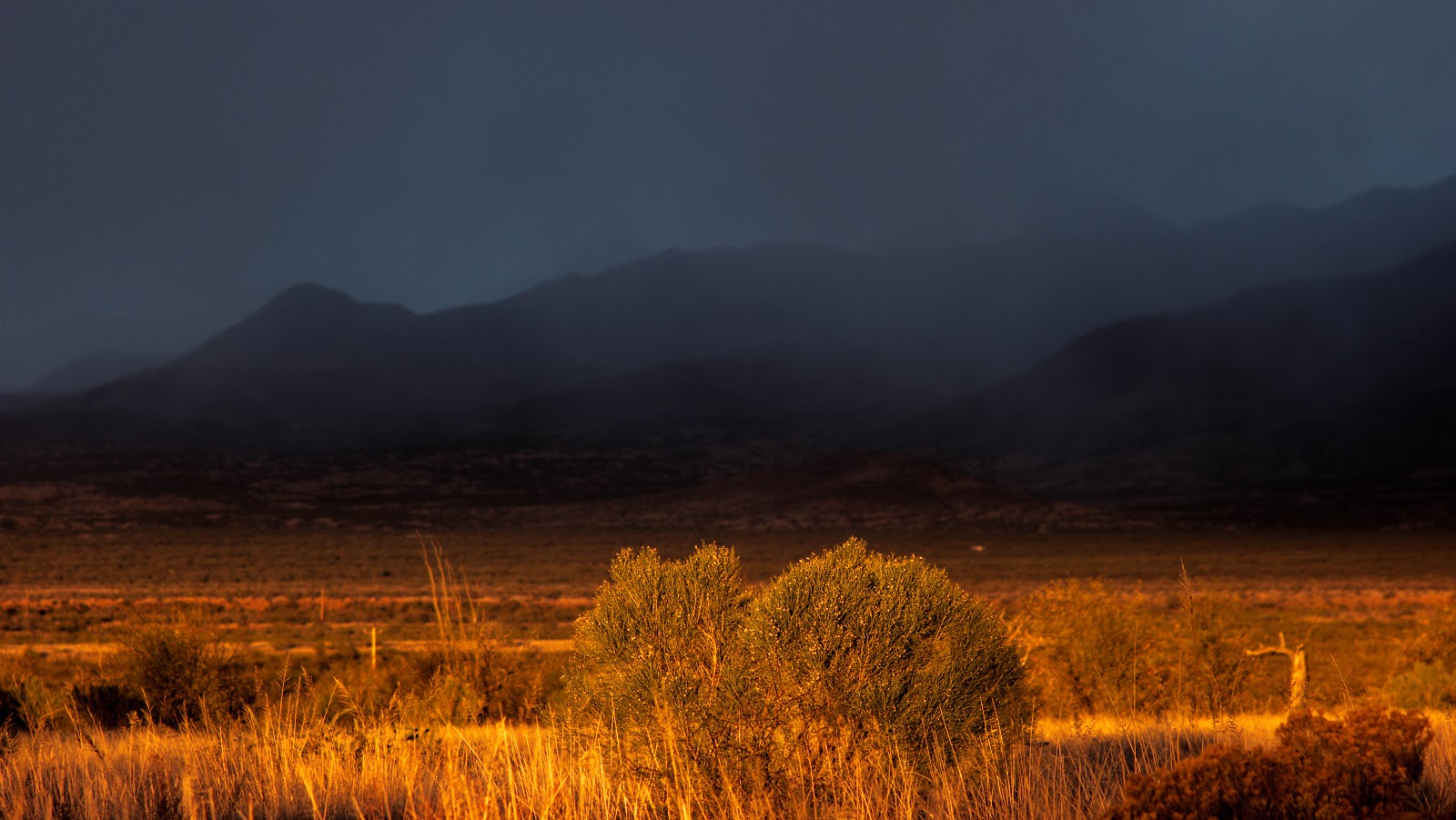
All photographs were taken with the following vintage lenses and a Samsung NX1 digital camera.: Kiron 28-85mm f2.8-3.8, Vivitar 300mm f5.6 and a Hanimar 135mm f2.8
Location: West side of Santa Rita Mountains - Southern Arizona by Bart Santello. All images were taken in RAW format and manipulated in Adobe Lightroom v5.7.1
Kiron 28-85mm Lens
Hanimar 135mm Lens
Vivitar 300mm f5.6
Kiron 28-85mm
Kiron 28-85mm Lens
Hanimar 135mm Lens
Kiron 28-85mm Lens
Vivitar 300mm f5.6
Kiron 28-85mm Lens
Hanimar 135mm Lens
Hanimar 135mm Lens
Friday, December 21, 2018
Promaster Spectrum 7 100-300mm f/5.6-6.7
The Promaster Spectrum 7 100-300mm f/5.6-6.7 MC Tele Macro is a telephoto zoom lens for 35 mm SLR cameras. The one I own has a Pentax K-mount and was mounted to my Samsung NX1 using a Fotasay adapter.
Given a 1.5 crop factor for the NX1's mirrorless system, that makes this lens a 450mm equivalent. Let's see how the lens performs from the photos below.
100mm Focal Length f16 / 1/100 sec / 0EV / ISO100
....and zoomed-in below:
300mm Focal Length f16 / 1/100 sec / 0EV / ISO100
200mm Focal Length f8 / 1/60 sec / 0EV / ISO100
Sunday, September 2, 2018
Testing a Tokina 28-70mm
Nikon-mount RMC Tokina 28-70mm f4 lens (SN 8444718) adapted to the NX1. Took it out for a few photographs today. The adjustment ring closest to the camera (not the aperture ring), sets the focal length (28mm-70mm). The wider ring toward the from of the lens is for focusing.
Note: I noticed when taking long distance photographs, I had to back-off infinity to achieve focus.
This is a good sharp lens for it's age.
Townsite of Arivaca, Arizona near the international border with Mexico.
Note: I noticed when taking long distance photographs, I had to back-off infinity to achieve focus.
This is a good sharp lens for it's age.
Townsite of Arivaca, Arizona near the international border with Mexico.
70mm f11 1/200sec ISO100 0.0EV
28mm f4 1/1000sec ISO100 -0.3EV
28mm f8 1/1000sec ISO100 -0.3EV
Tuesday, May 15, 2018
Samsung 85mm f/1.4 ED SSA
This 85mm f/1.4 ED SSA (Super Sonic Actuator) is a professional prime lens from Samsung Electronic, made for their NX-mount line of cameras including the NX1. It is a very sharp lens with fully automatic electronic functionality with the NX1 via firmware. The only drawback with this lens is the automatic focusing which can be clunky at time - hunting for the right focus especially when light is poor or when you add a Neutral Density (ND) filter.
The photographs below are presented 'as-photographed'. These photographs show the exceptional imaging quality of the Samsung NX1 camera with its back-lit 28-megapixel APS-C sensor.
Note: With sensor crop factor, this lens images at 35mm focal length equivalent of 130mm
f2.8 / 1/1000sec / ISO100 / 0EV
f1.8 / 1/320sec / ISO100 / 0EV
f7.1 / 1/1000sec / ISO100 / 0EV
f3.2 / 1/1600sec / ISO125 / 0EV
f4 / 1/1600sec / ISO100 / 0EV
Tele-Astranar 400mm f6.3 Lens Test
Found this Tele-Astranar 400mm f6.3 lens in a thrift store for $15. The thread mount looked like a M42, and although the diameter was about right, the threads on the Astranar looked dense (finer) than the M42 mount adapter I have for my NX1.
Then after doing some research I found that threads where for a T-mount (or T2-mount) so I ordered T2-to-NX adapter online.
The Astranar is a 'preset' lens meaning There is a second ring which lets you control where the other aperture ring stops (the one that actually closes the aperture down). So if you recompose an image you can quickly turn the aperture all the way open so the viewfinder is bright, then stop back down to your shooting stop without taking your eye away from the viewfinder (below).
Below are test photographs. All images are at f-stop 6.3 (open). All images below are 'as-photographed'
f 6.3 / 1/500s / ISO100 / EV 0.3
f 6.3 / 1/500s / ISO100 / EV -0.3
f 6.3 / 1/200s / ISO100 / EV 0.0
Close-up showing resolution
f 6.3 / 1/125s / ISO100 / EV 0.0
Overall I really like this lens even though the it is not that sharp and lacks in contrast and color saturation. However, the photo above shows this lens has some inherent artistic potential.
I will have to try next taking some RAW format photographs and try to improve in some of the lens's shortcomings in post.
Saturday, May 5, 2018
Olympus ZUIKO Auto-W 28mm f2.8 - VIDEO TEST
This is a 4K video test of a vintage Olympus ZUIKO Auto-W 28mm f2.8 adapted to a Samsung NX1. I'm impressed with this Olympus lens. Nice and sharp. I will add some still images and lens specifications at a later date.
There are two parts to this video: As recorded and fast grade using Film Convert. Skip to 2:47 to begin the 'graded' part of video.
[Please note that the point of this test is for the video only. The camera-recorded sound is poor due to acoustics of the setting and crowd noise.]
Subscribe to:
Posts (Atom)